
 Eighteen months. That is how long someone with Alzheimer’s may wait to find out whether a treatment made any difference at all. A recent Cochrane review sparked a lively discussion across the neurology community regarding anti-amyloid therapies for Alzheimer’s disease. The review highlighted a challenging reality: while these monoclonal antibodies are successfully removing amyloid plaques from the brain, their impact on disease progression is modest and the benefits in terms of day-to-day functioning and quality of life are often so subtle as to be unnoticeable by patients, friends and family.
Some view the findings as a setback. I don’t. It’s confirmation that clearing plaques isn’t the same as restoring function – and that the next frontier is recovering what the disease destroyed.
The development of monoclonal antibodies represents the first proof in decades that intervention in Alzheimer’s pathology is possible. Yet, this milestone is not the finish line. Removing amyloid plaques clears the obstacle. The damage beneath it remains.
We believe this is possible and aim to develop therapies that deliver tangible, visible improvements. A key to strategy to achieving this will be therapies that can regenerate synaptic connections that have been lost in Alzheimer’s disease. If amyloid clearance is about removing the roadblocks, the next step must be rebuilding the roads.
The Synaptic Approach
Alzheimer’s, as with other neurodegenerative diseases, is fundamentally driven by synaptic loss. Synapses are the vital communication pathways between brain cells—they are what allow us to think, remember, feel and act, and connect with our loved ones.
Our investigational therapy, tazbentetol, has been shown in preclinical models to work at the synaptic level to regenerate these lost connections. Our Phase 2a study in Alzheimer’s participants showed encouraging results that this approach can improve cognition.
During a 4-week placebo-controlled period, participants treated with tazbentetol experienced a rapid and significant improvement in cognition as measured by the standardized mini mental status exam (SMMSE). These improvements were sustained and there was evidence of growing improvement in another measure of cognition through 40 weeks of open label treatment. Complementing these cognitive outcome measures, tazbentetol treatment was associated with significant improvements in objective, quantitative EEG-based neurophysiological measures of brain activity that become impaired in Alzheimer’s disease.
Looking Ahead
The early encouraging data we are already seeing in our Phase 2a trial that support what we’ve believed since day one: a regenerative approach can fundamentally shift how we treat neurodegenerative diseases. While early data suggest activity of tazbentetol as a monotherapy, it may also offer a valuable regenerative component to combination therapies involving other emerging treatments based on neuroprotection or the mitigation of specific disease mechanisms, including amyloid buildup.
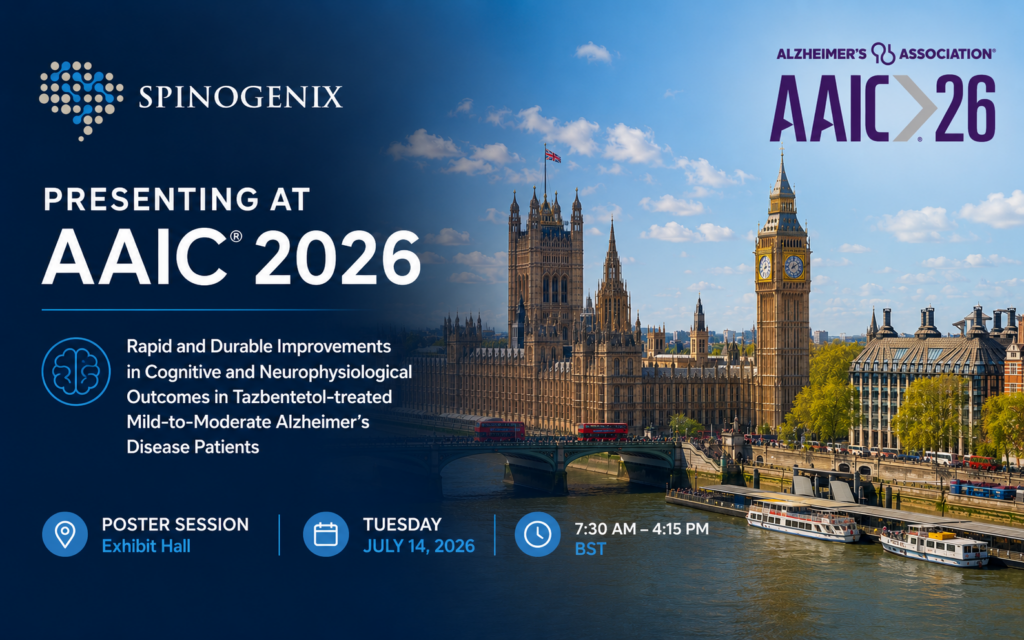
I am incredibly energized by the data we are generating and what it may mean for the future of Alzheimer’s care. We have some very exciting work to announce soon, and we look forward to sharing more of our progress at the upcoming Alzheimer’s Association International Conference (AAIC) in July. As we mark Alzheimer’s & Brain Awareness Month this June, this progress feels especially meaningful – a reminder of why urgency in this field matters and why the work ahead is so important for the millions of people and families living with this disease.
Let’s keep pushing the boundaries of what’s possible for our patients.
#AlzheimersDisease #AAIC #BrainAwarenessMonth #Tazbentetol #Synapse